Friday, January 30, 2009

The Unique Anais Nin

anais Pictures, Images and Photos

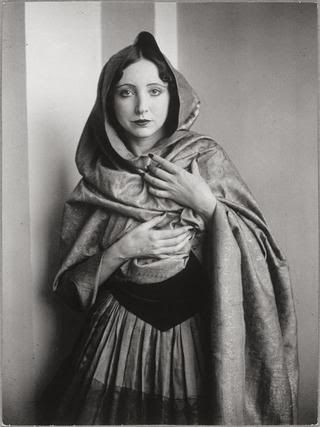
The Unique Anais Nin

“I have heard the beast poundin the breath of a bird... and felt in its feathers the fire.I have hated with passionthe gathering herdand the weight of its common desire. Ah, but no rest for weary terrestrial wings in beating oppressive air; they long for the strength of celestial things like the essence of myrrh in her hair.”

Anais Nin was a highly unconventional individual; I stress the term “individual” here, since she was not someone who was easily swayed by herd-think and convention. Among her many notable quotes one will find: “You have a right to experiment with your life. You will make mistakes. And they are right too.”

Not even her naitivité and childhood were “ordinary”. She was born near Paris in 1903 to a Catalanese-Spanish pianist/composer, Joaquin Nin, and a Danish-French mother, Rosa Culmell; both of whom had been born in Cuba. She spent her childhood in a number of different European locales untill she was 11, when her father abandoned the family and left for America. This prompted the mother to move to New York with her daughter and two sons, where Anais began to write her journals. She began to work at 15 as a model and dancer. Having lived amongst Spanish and Cuban relatives for much of her childhood, she was an adept flamenco dancer, as well as excelling at various other styles.

When Anais was about 20, she married Hugo Guiler. In the mid-1930’s they moved from New York to Paris. She worked as a lecturer/teacher in addition to her dancing and modeling, and later as a psychoanalyst under Otto Rank. Anais and Hugo supported a number of avant-garde artists, including Henry Miller, with whom Anais began a torrid love affair. Just before the outbreak of WW II she and Hugo moved back to New York. Anais divided her time between New York and Los Angeles, and also between Hugo and a much younger lover, Rupert.

She came to be something of a cult figure of the early feminist movement, but gradually rose to fame and distinction in literary circles. In 1973 she was awarded an honorary doctorate from the Philadelphia College of Art and in 1974 she was elected to the National Institute of Arts and Letters. She died in 1977.

During her literary career, she wrote a number of novels and a surrealist prose poem. The most famous of these works is the novel “A Spy In The House Of Love”, but it is for her amazing collection of diaries that she is best known. These were written in order to improve her writing skills as well as to effect a synthesis of her self as both artist and woman. They are no ordinary diaries; they display masterful writing skill and are often deeply moving and/or profoundly insightful as art.

Though the diaries she became famous for are the ones beginning from about 1931, one can hardly believe, when perusing her earliest journals from the teens and 20’s, that one is reading the work of an adolescent girl. She is already so mature at this stage of her life, she is like a little woman; even when writing of the relatively normal boy-crazy infatuations of the average teenaged girl.

As she progresses through the years into maturity, these diaries become increasingly unabashed in their exposure of every nerve-ending of her experience, right down to the juicy details of intimate sexual congress, but it is never anything to be construed as pornographic. It is art of a very fine caliber which considers no aspect of life unworthy of its attention. In fact, she and Henry Miller were once approached by a somewhat kinky, wealthy collector who offered them a dollar a page to write some “erotic fiction” for him. They obliged, but the man was greatly displeased with the results, even though they were very graphic, and complained: “I’m not paying for literature!”

As an example of this mode of Nin’s art, take this selection from one of her diaries

“The entire mystery of pleasure in a woman’s body lies in the intensity of the pulsation just before the orgasm. Sometimes it is slow, one-two-three, three palpitations which then project a fiery and icy liqueur through the body. If the palpitation is feeble, muted, the pleasure is like a gentler wave. The pocket seed of ecstasy bursts with more or less energy, when it is richest it touches every portion of the body, vibrating through every nerve and cell. If the palpitation is intense, the rhythm and beat of it is slower and the pleasure more lasting. Electric flesh-arrows, a second wave of pleasure falls over the first, a third which touches every nerve end, and now the third like an electric current traversing the body. A rainbow of color strikes the eyelids. A foam of music falls over the ears. It is the gong of the orgasm. There are times when a woman feels her body but lightly played on. Others when it reaches such a climax it seems it can never surpass. So many climaxes. Some caused by tenderness, some by desire, some by a word or an image seen during the day. There are times when the day itself demads a climax, days of which do not end in a climax, when the body is asleep or dreaming other dreams. There are days when the climax is not pleasure but pain, jealousy, terror, anxiety. And there are days when the climax takes place in creation, a white climax. Revolution is another climax. Sainthood another.”

That is almost like having one yourself, yet at no time are you aware of anything risqué. She rises above the mundane into a realm of beauty and veracity. That she also indulged in a sort of “creative lie” in various places throughout her journals has been much discussed, but has been vindicated admirably by Anais herself, promoting them as a viable way of dealing with the many lies which are entwined throughout the “reality” of the mind. The Diaries of Anais Nin are a journey through an actual life which is embellished by the fantastical in such a way as to further illuminate the truth of the characters who populate these books.

And these characters are amazing: Henry Miller and his wife, June, of course, but also all manner of known artist, actor, dramatist, writer, musician, analyst, philosopher, etc. from the golden eras of Art Deco, Dada, Surrealism, Jazz, Existentialism, bohemianism of the beatnik variety... right up through the wild 60’s, when Anais herself experienced LSD and other mind altering drugs. I can remember idly picking up a copy of one of her diaries in the home of a friend some years ago and reading of Anais and some acquaintances going to a small trailer in a gypsy encampment to hear the great Belgian gypsy guitarist, Django Reinhardt, play his brand of fiery jazz. I couldn’t believe it, page after page of incredible anecdotes involving many of the great artists of the 20th century. All this intertwined with the interior mindscape of a fascinating woman, revealed with stunning frankness and finesse of writing style as well as a dreamlike, teasing, womanly mysteriousness that makes you wonder about what she is actually doing to you.

It is somewhat discouraging that, of late, certain proponents of feminism have called into question Anais’ viability as a representative of the female perspective, since she had no aversion to taking a somewhat un-feminist stance at times. But this is how she was – a true individualist – a free being, unafraid of any experience, even that of fear. Isn’t that what we all long to be, male and female alike? Is this not what “liberation” is all about? As the great woman herself has said: “We don’t see things as they are, we see things as we are.” It is only that the charisma of her living physical presence is no longer with us which allows this sort of thing to happen.
At any rate, you owe it to yourself to check out her diaries at least, if not her novels, erotic literature, poetry, and essays. They are all well worth reading, though I speak from limited exposure (having read only some of the journals and bits of her erotic works as well as a few short stories and essays), and almost anything by her that you come across will be worth the investment. You will become intimate with one of the most intriguing females you have ever encountered... one who you will find as thought provoking as she is alluring.

ladyred Pictures, Images and Photos
Femme Fatale Pictures, Images and Photos

Misunderstood Femme Fatales

Throughout history, women labeled as “evil” have made their mark. We think of these females as the conniving ones, the seductresses with hidden agendas. Take the story of Snow White for instance. We have Snow White, a perfect goody-goody waiting for her prince’s kiss to dislodge a piece of apple from her throat (talented prince!). Then we have the Evil Queen, who is jealous of her step daughter’s beauty and tries to kill the competition. The Queen has better clothes, cooler eyebrows (plucked into points) and lots of attitude. So, she does not get the prince (he does not exactly get me excited either, put on a fishnet shirt and vinyl pants already), but she surely has the confidence to get what she wants accomplished.

So, we have a sweet young girl in a peasant’s blouse and a beautiful Queen in great capes. Think about it, which would you rather be? I choose to be the Queen anyday. Perhaps she was just misunderstood, poor woman. As she got older, she began to get a few wrinkles, and her young step daughter got all the cat calls. Could it be that she was just feeling left out?

As the years go by, there have been many women who have been as misunderstood, if not even more so. Take for instance Cleopatra. We think of her as the temptress of Mark Antony and Julius Caesar, causing the fall of empires. Well, it is doubtful that she had time to plan such downfalls, due to the little known fact that she had a bunch of children. Knowing that she had a group of rowdy kids to keep an eye on, how could she even have time to coil her hair?

Another name we shudder at is Lucretia Borja. Rumor has it that she kept bottles on her boudoir with perfume to seduce and poison to kill. Sure, that is the typical set up for any femme fatale, but Lucretia’s story is much different. She was forced into a marriage with a man she depised. Her father set this match up to ensure his own power. Both Lucretia and her husband were not pleased by this arrangement. Her lovely husband soon spread false stories that his wife engaged in incest and partook in murder.
Well, he got what he wanted, an annulment, while she became infamous for her treachery. Poor Lucretia, after falling in love with her second husband, she lost him by the hand of one of her brothers. This murder freed her to marry another powerful man so her family could gain higher standing.

Anne Boleyn, the second wife of King Henry to VIII is remembered for bewitching the king with her powers. Henry fell in love with this beautiful temptress, only to be disappointed she did not produce him a son. Accusing Anne of infidelity, he said she was also a witch who trapped him involuntarily into marriage. So, Anne was sent off to the tower to be beheaded. her cries are still heard throughout the castle.

When we think of frivolous women, one of the first names that comes to mind is Marie Antoinette. This Austrian princess came to France as a mere child (fifteen years old!) to marry Louis the XVI. She had nobody to guide her when she arrived and found court formalities to be ever so boring. So, off she went to party. News spread of her lavish spending, in a time when France could not afford such excess. Anger arose and the natives found it especially easy to blame a foreigner. Marie was never shown to the other side of life, the one full of poverty and starvation. To her, being Queen meant fun and games.

It was her fault that she never looked at the poor, but she had to escape her sorrows of being so far from home. As we all know, Marie was put to the guillotine, dying young and lovely.

Even though she is a fictional character, Scarlett O’Hara has as much personality as the above ladies. In fact, she seems to be larger than life. A flirt, she drew in the men and married quite a few. She could not help but be so full of life. Scarlett is the typical Aries woman; strong, determined, and going after what she wants, not aware of what goes down around her until it has fallen. Poor Rett, he just could not keep up with her.
Lastly, Saint Joan of Arc. It is true that she is not seen as a misunderstood femme fatale today, but in her life, she was extremely mistreated. Whatever drove her to put on her armor and take control of the men (hmmmmm...) is still a mystery. At the time she was hunted down and labeled a witch. As she burned, the crowd cried out and proclaimed her a martyr. If only they had come to their sense a bit sooner. But, this way we can never forget her.

Sometimes history distorts the truth and forgets little details that either explain or alter what is written in the books. What is interesting about these women is that everyone remembers them because of their wrong doings. Honestly, if Marie Antoinette had not uttered "let them eat cake", would she have gone down in history? Probably not. As this tale of the misunderstood ends, think back to the fairy tale of Sleeping Beauty. Sure, the Princess Aurora has a great name, but the Witch Malificent in the Disney version gets a great headpiece. Plus, Malificent had every reason to be furious at not being invited to the christening party, don’t you think?
Other Resources:Cleopatra, the last pharoah.Lucretia Borja (also spelled Lucrezia Borgia), and the history of her infamous family.St. Joan of Arc. Taken from a site with a mission to spread information about and devotion to St. Joan of Arc.

Femme Fatale Pictures, Images and Photos
High Tea Pictures, Images and Photos

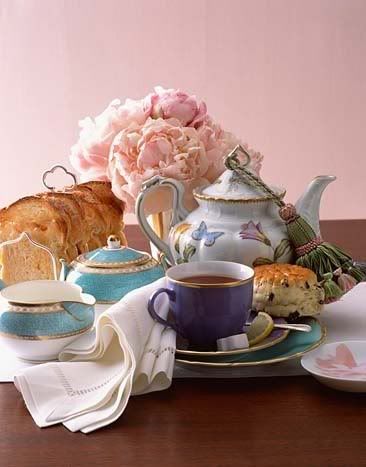
The Ritual of High Tea

Dedicated to the ceremony of afternoon tea.

The tradition of drinking tea in the presence of company is one of the oldest sustenance rituals. Its roots can be found in many ancient societies and was used for many purposes. Business, celebration, and nourishment are all reasons for participating in the ritual of tea. As legend has it, tea was invented by a Chinese emperor in 2737 BC, when leaves accidentally blew into his pot of boiling water. It took many centuries to make it’s way to the rest of the world. Europe finally received this elixir in the 1600’s as Asian trade routes were carved out. At first only the extremely wealthy could afford the precious leaves. Tea was kept in locked boxes made expressively for that purpose. As the Victorian era dawned in England, tea was a commodity but by the end of the era it formed the foundation for a closely followed ritual of grand proportions. The tea time snack, originally designed by the British, was a way of fighting off hunger pains. The dawn of the 20th century saw a huge business evolving to supplying people with every item and service imaginable for the process of afternoon tea.

The modern tea ritual’s roots lie with a subject of Queen Victoria. Anna, the 7th duchess of Bedford (1788-1861) was a lady in waiting to the Queen. She traveled extensively across Europe and was quite educated and worldly for her time. The wealthy noble’s of the day would eat a big breakfast, a small lunch, and a grand supper at nine in the evening. To counteract what Anna called a “sinking feeling” late in the afternoon she began asking her servants to bring tea with small cakes and pastries to her boudoir. This “snack” was cause for much speculation and interest in Queen Victoria’s court. Anna began sharing the small meal with her friends. She would send out invitations and receive the ladies in her dressing room. Victoria caught wind of the idea and quickly fell in love with it, so much so that a tradition was born. By the late 1840’s the Queen was having formal dress afternoon teas daily. These never lasted past 7pm because one needed ample time to change clothing in preparation for supper at 9pm. What a tough life those nobles lead!

What started as a leisure ritual for the wealthy quickly caught on as essential with the working class. At 5pm, immediately following work, the middle class would partake in “family tea”. The advent of gas lighting brought on longer work days. Breakfast was eaten before the sunrise and a light portable snack was consumed for lunch at one’s work station. As per the rules of etiquette, supper wasn’t served until 8pm. The eight hours between lunch and supper were tough for a working man to handle. Tea quickly became a wonderful compromise. “Meat tea” or “High tea”, as it was called because of the standard table height where it was partaken, became the modern day dinner. The late meal was dropped all together because a meat tea quickly consisted of that as well as potatoes, vegetables, breads, sweets, and of course tea. Tea was the foundation of the evening ritual because it tasted so good that it made the bland foods eaten by the lower classes nicer to consume.

By the late Victorian era, afternoon tea was again mostly a pastime of the idle rich. It fulfilled the purposes of socializing, event planning, introductions, informal business meetings, as well as a perfect platform for gossip which was a major pastime of the day. This 4pm tea ritual became known as “Low tea” because it was served in the low point of the afternoon. The name is also indicative of the coffee table height of sitting room furniture.

Tea fare included many items. Elaborate bite sized sandwiches that were recently made popular by the Earl of Sandwich as well as a plethora of sweets and pastries were incorporated into these afternoon events. Certain foods became popular during each season of the year. Fruit and berries were eaten in the spring and summer while heavier starch items were reserved for the colder months.

Trays of different items were placed all over the sitting room were tea was served. This allowed the guests to mingle through out the early evening. The Victorians called a tea service a tête-à-tête. This consisted of a teapot, sugar bowl, and a cream pitcher. So many contraptions were invented for the single purpose of tea consumption, such as sterling silver items like the berry scoop and bun warmer. Boiling water was often brought around by servants at regular intervals to replace the cooling water in the teapots. What started out with basic bread and butter items eventually turned into a full blown gourmet “snack”.

The female wardrobe even expanded to include a new more revealing dress, the Tea Gown. Tea Gowns, or ‘teagie’ as contemporary slang termed them, were a significant part of a woman’s arsenal. It was the definitive item that radiated whether a Lady was fashionable, racy, or frumpy. It allowed a perfect place for the Kimono inspired Asian fashions of the late Victorian age to be tested out. By the early Edwardian period a lady’s teagie wardrobe consisted of her most exquisite and expensive fashion items. The diaphanous one piece gown had its roots in the peignoir. No corset was required with this filmy dress but the fine line did hover at respectability. Dressing in a tea gown did have its uses though; a man would call on his mistress at tea time because of the easy access gown that required no maid to put back on.

I recommend that you dear reader take the time to prepare a wonderful afternoon tea for some of your friends. Pick a theme, send out invitations and enjoy the good company. This is a perfect excuse to get all dressed up; as we are all painfully aware of glamorous clothing taking a back seat to comfortable cookie cutter clothing in today’s society. You will find a few recipes here to get you started. If cooking is not your forte, many hotels offer tea to the general public on a daily basis. Fine hotels in England, such as London’s Ritz Hotel, as well as America began offering afternoon tea service in the 1880’s. Hotels advertised their elegance by referring to the tea court. The Plaza Hotel in New York city opened its Palm Court in 1907. I offer up this American spot as the definitive Victorian place to enjoy the ritual of high tea.

http://www.morbidoutlook.com/nonfiction/articles/2001_05_hightea.html

High Tea Pictures, Images and Photos
FRIDAY

FRIDAY

Japanese Tea Ceremony: A Gaijin* Primer

Japanese Tea Garden Pictures, Images and Photos

Japanese Tea Ceremony: A Gaijin* Primer

Let’s face it: Japan is in. An entire generation has been taken by storm through the steady influx of Japanese goods, fashion, culture and most definitely, food. From video games and kanji tattoos** to study-abroad programs in universities to supermarket sushi, Japanese things are the things to have, and Japan is the place to be. Don’t get me wrong; I love Japan. I am in no way suggesting that this wave of Nipponophilia is a bad thing; in fact, I want you to go get some!

Many of the cultural traditions of Japan got their start in China, one of which is the traditional Japanese tea ceremony. The Buddhist monk, Eichu, brought tea leaves to Japan from China in the 9th century, where they were smothered with affection and interest. Initially, Buddhist monks drank the highly-caffeinated green tea to sustain them through their daunting twelve-hour prayer sessions. When this tea was introduced to the aristocracy, it quickly became an opportunity for socialization but it never lost, or ever strayed from, its strong Zen roots.

The man credited with popularizing the tea ceremony, chanoyu, which literally means “hot water for tea”, is Sen no Rikyu, who is also credited with finalizing the ceremony that is still in use today. In the beginning, only men could study tea or become tea masters. Today, however, most tea instructors and nearly all tea students are women.

Most students take classes weekly or monthly, while devoted students, or those wishing to become instructors, study daily. The study of tea is never considered to be fully complete, and after two-and-a-half years of weekly lessons, I am still considered a beginner. My sensei is in her late seventies, but every summer she returns to her hometown in Japan for three months of daily tea lessons. Studying chanoyu is a lifelong journey, but just a little taste would do anyone good.

The structured tea ceremony itself is a remarkable thing. There are a mulitude of variations of the basic tea ceremony; individual ceremonies are chosen based on the season, the occasion, the guests, and the instruments available. These instruments are typically heirlooms and most tea bowls are passed from tea master or instructor to their successor. The tea bowls used by my sensei, for example, are several hundreds of years old.
Guests proceed through a small tea-house garden and are greeted outside the tearoom by a maid or the tea master or mistress. They remove their shoes and enter through a low, square door or a sliding panel door, and are seated, typically on small flat cushions on a tatami-mat floor. In some ceremonies, a small and involved meal is served. For ceremonies where no meal is served, a sweet is offered to each guest in turn. The texture, shape, and flavor of the sweets served, like the pattern on the tea bowl, tea tray, and tea mistres’ kimono and obi, reflect the season and occasion.

The tea mistress has cleaned the tea bowl and utensils prior to welcoming the guests, but she cleans them again inside the tea room, welcoming the gods of water and fire to cleanse the tools and boil the water for tea. Tea is prepared, frothed in a small bowl with a bamboo whisk and served to one guest at a time. The guests are given time to drink the tea and appreciate the tea bowl and utensils, as well as the flower arrangement and scroll in the alcove. When the last guest has drunk, unless the guest of honor has asked her to finish the ceremony, the tea mistress will continue serving tea to each guest in order. When the cue is given to conclude the ceremony, the tea mistress will cleanse the bowl and utensils once again, this time invoking the gods of fire and wind. After the ceremony is completed, the guests claim their shoes and proceed out.

The process of the tea ceremony is intricately choreographed. Every single movement, from the opening of the teahouse door, to the presentation of sweets, is predetermined. The teahouse, with its prescribed motions, sparse but exceptionally careful dècor, and smell of tatami and tea, could be a space outside of time.

The opportunity to attend a tea ceremony is not one that should be missed. You will come away refreshed, relaxed, and infinitely more comfortable with the universe not to mention your own radical self.

Many towns across the United States are home to Japan Societies, and most of the major cities even host tea schools, where classes are available.

Schools in major cities:
Washington, D.C.
Philadelphia
Boston The teahouse at Mt. Holyoke College, where I studied (open to the public): Wa-Shin-An Find a teahouse or school in your area:
Tea Hyakka
Holy Mountain

* Gaijin is a Japanese word literally meaning “outside person”, commonly translated as “foreigner”. Gaijin is a short form of the full word gaikokujin.

http://www.morbidoutlook.com/nonfiction/articles/2006_08_japantea.html

Japanese Tea Set Pictures, Images and Photos

Wednesday, January 28, 2009

Espresso Pictures, Images and Photos


Javaphile

History of and ode to the drink that gives us life...

Legends
A reliable source – and several books, as it is a common myth – informs me that a man (Kaldi) with hyperactive goats (or sheep, but not giraffes) discovered coffee; well he discovered his favourite goat chewing on the cherries of some strange bush and on trying it himself became equally hyperactive. While not commenting on the potential dangers of chewing on something previously unidentified, or on the worrisome concept of someone having a favourite goat, we should be grateful that this man decided to investigate the cause of his goat’s excitement and didn’t resolve the problem with an extended family roast.

Another legend maintains that an Arabian was banished to the desert with his followers to die of starvation. In desperation, Omar had his friends boil and eat the fruit from an unknown plant. Not only did the broth save the exiles, but their survival was taken as a religious sign by the residents of the nearest town, Espresso.

In any event, the happy result for us is a phenomenon of religious proportions; god made beverage if you will – just add water. In this journey through a caffeinated land we will examine the history and origins of coffee and indulge in gratuitous cultural insults to provide colour, illustration and illumination.

Fact. Maybe. And a little bit of history.
So, what is coffee? Real coffee comes from the seed of a cherry of a tree that can grow from sea level to a height of 6000 feet. There are two main [commercially significant] types of coffee bean, robusta and arabica; Arabica is the one with the aroma and flavour, robusta has higher levels of caffeine. For aesthetic reasons coffee isn’t instant – although the first “instant”, water-soluble coffee was invented by Japanese-American chemist Satori Kato of Chicago in 1901. Anyway, while you can drink instant, it lacks the intrinsic qualities of real coffee, defining characteristics like aroma and flavour. Instant coffee is more likely to be the bastard child of any number of things, one of which is chicory, where the roots are roasted and used as a coffee additive. Those of you who drink instant coffee in the misbegotten belief that you are having a cup of java should be hanging your heads in shame, essentially you’re a peasant.

Anyway, before it became a liquid beverage it is thought that the coffee bean itself was crushed, mixed with animal fat, rolled into a ball and chewed, sweet-like. A nomadic tribe, the Oromos, - who chewed these confections before going into battle against a group called the Bongas – usually ended up in the slave markets of Harrar (as a result of getting the backsides kicked) thus accidentally bringing coffee into the trade/ slave routes. The progenitor of the coffee drink is possibly either Kati, where the leaves are roasted and then brewed, or Amertassa where the leaves are sun-dried and brewed. With reference to the legend, a leaf-based coffee progenitor actually makes a good deal of sense, as from the dietary perspective of your average goat a leaf is going to look far more appetising than a bean.

Where were we?
The legend continues that after our friend with the goats discovered this remarkable plant he either told (or was approached by) a passing local monk – who wondered why Kaldi was acting so strangely – about the effects of this wonderful plant. From this point on knowledge and rumour about the plant spread rapidly and as it became known it travelled from Africa to the Arabian Peninsula, thence to Turkey and eventually into Europe by dint of Venetian traders. Then, through the efforts of fraudsters, smugglers, governments and other nefarious goings on – coffee hit North America, the West Indies and South America. Strangely enough, in 1893 coffee seed from Brazil was introduced into Kenya and what is now Tanzania, only a few hundred miles south of its original home in Ethiopia.

Back to the beginning.
The above is of course a vastly simplified description of events, as there is as much disagreement about where coffee was one writer places the discovery of coffee in Africa between 1500-3000 years ago, whereas another source argues that it was probably discovered and first used in Arabia in the 13th century, so let’s agree that coffee was first discovered in Africa and was brought to Arabia, probably through the slave trade. The Arabs were fiercely protective of their coffee plants and severe restrictions, i.e. death, were placed on anyone who tried to export fertile beans to other places going so far as to sterilise (through parching or boiling) any export beans – obviously someone got some fertile beans out.

Records show that coffee was first used regularly as a foodstuff in Yemen in the 6th century. But it was not until the 11th century that coffee, as a drink (using the bean) was first brewed, when Arab traders boiled the beans and created a beverage they called "qahwa" (literally, that which prevents sleep). There is some measure of academic disagreement here as to whether the Arabs were roasting their coffee beans before brewing their drink – thus making proper, “modernÉ coffee; we may assume that they were, as Monks, many centuries previous, were pouring boiling water over their coffee beans in order to get through late night devotions – and who can blame them?

Dependent on whom you believe, coffee was either brought to the North American continent by Captain John Smith when he helped to found the colony of Virginia at Jamestown in 1607, or in the 1700’s by a Frenchman; we can assume that it was probably the former, as by 1668 coffee had replaced beer as New York’s favourite breakfast drink. (At the same time in Europe, coffeehouses were opening everywhere; Italy’s first 1645 and England’s in 1652). By 1773, after the Boston Tea Party incident, the Continental Congress had declared coffee the national drink of the United States – which makes you wonder why, after 200 years of practice they still can’t make a decent espresso. It is also a cause for relief coffee was discovered before Coke.
As for that Frenchman, we can be certain that in 1723 French naval officer Gabriel Mathieu do Clieu, on leave from Martinique, stole a seedling from the Kings royal hothouse (to be fair he had tried asking permission first and was refused) and transporting it through many travails; jealous passengers, pirates, storms and water rationing, took it home. Within 50 years an official survey recorded 19 million coffee trees on Martinique. Eventually, 90 percent of the world's coffee spreads from this plant – importantly, this is one of the few positive contributions made to another nation, and indeed the world’s culture, by the French.

You want it how?
So, if you can’t have your coffee [sic] instantly how can you have it. Firstly, there is percolated and drip-filter coffee. Beloved of diners, greasy spoons and small towns - who probably think Espresso is one of them fancy imported ice hockey players - percolated and drip filter coffee works on the concept that you keep the coffee trapped in a semi-permeable paper bag and run hot water through it with the resultant drips, drops and splatters ostensibly being coffee. I say ostensibly because whilst the colour may be reminiscent of coffee, taste, aroma and even the consistency of the liquid are a pale imitation. Incidentally, the world's first coffee shop, Kiva Han, open in Constantinople in 1475, at the same time Turkish law made it legal for a woman to divorce her husband if he fails to provide her with her daily quota of coffee. Divorcing your partner is also the correct response if offered percolated or drip-filter coffee. Percolated and drip-filter coffee can be relied upon to disappoint and, if left long enough, remove the lining of your stomach without any resultant pay-off for your troubles.

A significant improvement on the above obscenity is plunger coffee. Be warned, there is no in-between with plunger coffee it is either good or reminiscent of boiled swamp water. Good plunger coffee is dependent on three things: correctly ground coffee, the correct amount of water and a decent plunger. The plunger is designed with the technophobe in mind – add coffee, water‡.wait, then push, this is not rocket science. Do note that buying a crappy plunger will ensure crappy coffee, always ensure that the mesh of the plunger unit snugly fits the pot otherwise you get to eat rather than drink your coffee.

The coffee you should use with a plunger is a matter of personal taste. Most halfway reputable places that sell decent coffee should offer to grind the stuff for you and they should, if they know their job, ask how you are going to use the coffee. For a plunger a medium fine grind is best, as you want the maximum amount of the grounds surface area mixing with the water; too coarse a grind and your coffee may be weak.

The dangers with getting too fine a grind are physical rather than taste related. An extremely fine grind, as you would get for an espresso machine, will result in a stronger coffee, but will also result in a battle of wills between yourself and the plunger. If you’re careful, you get your coffee. If you are less lucky then you can either send the entire plunger assemblage rocketing across the kitchen or do a remarkably accurate impression of a geyser as the resultant pressure forces the hot water up the sides of the plunger and into your face.

Espresso machines and stovetop coffee-pots work on a similar principle – pressure. A stovetop coffee-pot is a little pot that is able to be divided – it unscrews – into two halves with three separate parts, which from bottom to top are water holder, coffee holder and the holder for the result of water and coffee. I’ll assume you all know what as espresso machine is. The stovetop pot, which looks just like a Dalek, heats when placed directly on top of your element, the heated water, turns to steam and is forced through the grounds and collects at the top. Note : You gotta watch it like a hawk – you turn your back on it and you’ve got burnt coffee, and nothing tastes worse than burnt coffee, not even cauliflower.

Finally we have espresso, the font of true coffee and a prime location for finding pretentious wankers who take their coffee anally to enhance the taste experience. Surprisingly, it wasn’t the Italians who invented the espresso machine, it was the French; the Italians just refined it until it worked properly. More than anything the art of espresso is about attention to – which is why it is hard to get a decent espresso as most barristas are too busy being impressed with themselves.

There are a multitude of ways for you to have your espresso, the one true way is black, be it either a long black, a short black or, if you are in a hurry, a ristretto – which is like a concentrated short espresso. Heathens believe that adulteration through the addition of milk is acceptable, from this we get the flat white, the latte and the hideous cappuccino. Yet, however, you drink it, know that you are drinking the beverage of the gods, even an early Pope blessed coffee in a political move stating “coffee is so delicious it would be a pity to let the infidels have exclusive use of it”.

espresso Pictures, Images and Photos

http://www.morbidoutlook.com/nonfiction/articles/2001_02_javaphile.html


Espresso Pictures, Images and Photos